Tyres are not cheap and they play a big part in keeping you safe on the road. When they wear out quickly, it can feel like you are constantly paying for replacements instead of getting their full life.
Fast tyre wear is often preventable and you do not need to be a mechanic to spot the basics. This guide walks through 6 of the most common reasons your tyres might be wearing out too fast, what they usually look like on the car, and what you can do about each one.
1. Incorrect tyre pressure
Running the wrong tyre pressure is one of the quickest ways to wear tyres out before their time. When a tyre is underinflated, more of the outer shoulders of the tread are in contact with the road and the tyre flexes more as it rolls, building heat and scrubbing away rubber faster than it should. On the road you might notice heavier steering, a slightly sluggish feel and poorer fuel economy because the car has to work harder.
When a tyre is overinflated, the centre of the tread does most of the work while the edges are lightly loaded. There is less rubber in full contact with the road, so the car can feel nervous over bumps and in the wet, and you often see the centre wearing faster than the shoulders, which is a classic sign that pressures are too high.
To learn more about tyre wear, read our blog Tyre Wear Patters: What Your Tyres are Telling You.
What to do:
- Check your tyre pressures regularly, for example every few weeks or at each fuel stop.
- Use the vehicle’s recommended pressures from the placard in the door jamb, fuel flap or owner’s manual, rather than the maximum pressure shown on the tyre sidewall.
- Try to check pressures when the tyres are cold, before a long drive, for the most accurate reading.
2. Bad wheel alignment
Wheel alignment is simply the angles your wheels sit at relative to the car and the road. When alignment is right, the tyres roll straight and share the load evenly, and when it is out they scrub along the road instead of rolling cleanly, which wears tread quickly.
Hits from potholes, rough roadworks, clipping kerbs when parking or taking sharp speed bumps can all knock alignment out. Worn suspension or steering parts can also let the angles wander over time so the tyres are no longer pointing quite where they should.
Warning signs of alignment issues:
- The car pulls to one side when you are driving on a straight, flat road.
- The steering wheel sits crooked when you are going straight.
- One shoulder of a tyre is bald or badly worn while the rest still has tread.
What to do:
- Ask for an alignment check if you notice any of the signs above.
- Get alignment checked after suspension or steering repairs, or after a big hit from a pothole or kerb.
- If you are fitting new tyres, get an alignment check at the same time so the tyres wear more evenly from day one.
3. No regular tyre rotation or balance
On many passenger vehicles, the front tyres work harder. They usually steer the car and do a lot of the braking, and on front wheel drive vehicles they also put the power down. If tyres are never rotated, the front ones can end up worn out while the rears still have plenty of tread.
Over time, tyres can also develop small imbalances as they wear. This can show up as a vibration through the steering wheel or the body of the car at certain speeds. If it is ignored, it can contribute to patchy or uneven wear.
Signs you might be overdue for a rotation or balance:
- Front tyres wearing much faster than the rears.
- A light vibration through the steering wheel at open road speeds.
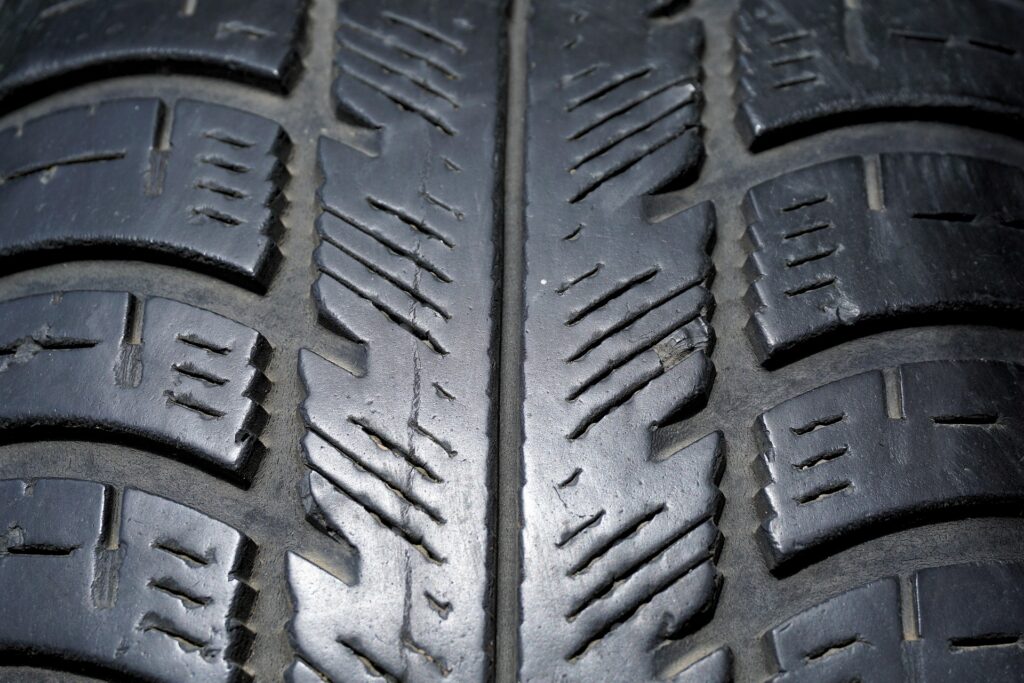
- “Sawtooth” or stepped wear around the edges of the tread blocks.
Simple rotation and balance habits:
- Aim to rotate tyres roughly every service or around 10,000 km or every 6 months, following the pattern recommended for your vehicle.
- Ask for a balance check if you feel new vibrations or notice uneven wear.
- When you fit new tyres, starting with a fresh balance gives them the best chance of wearing evenly.
4. Worn or faulty suspension and steering parts
Your tyres are the only part of the car that actually touch the road, but they rely on the suspension and steering system to hold them at the right angles and keep them stable. When parts like shocks, bushes, ball joints or tie rod ends wear out, the wheels can bounce, wobble or move around more than they should, which chews out tyres unevenly.
Common clues that suspension or steering may be causing wear:
- A bouncy or unsettled ride over bumps.
- Clunks, knocks or rattles from the front end.
- The car feels vague or wanders on the open road.
- Odd wear patterns on one corner, even after you have checked pressures and alignment.
Why fixing these parts matters for your tyres:
- Fresh shocks help the tyres stay in better contact with the road, spreading the load more evenly.
- New bushes and ball joints keep the wheels pointing where they should, instead of moving around under braking or over bumps.
- Sorting worn parts early often costs less than replacing a set of tyres that have been scrubbed out long before their time.
If you are unsure, it is worth asking a workshop to check both alignment and key suspension components together, rather than replacing tyres and hoping the problem goes away.
5. Aggressive driving and rough roads
How the car is driven and the road conditions both play a big part in how long tyres last. Fast cornering leans heavily on the outer edges, hard acceleration can spin the tyres on wet or loose surfaces, and late, heavy braking relies on friction to slow the car quickly, all of which shave life off the tread.
Rough roads add another layer of stress to your tyres. Regular hits from potholes, broken chipseal, sharp speed bumps, hidden holes in deep puddles and nudging kerbs when parking can bruise the tread and sidewalls. Over time this combination of harsh inputs and hard knocks can knock the alignment out, damage the internal structure of the tyre and create flat spots, bulges or cuts that mean the tyres need to be replaced early.
Small changes that help your tyres last longer:
- Leave a little more following distance so you can brake smoothly instead of hard and late.
- Slow down a touch more for corners, speed bumps and rough patches.
- Take care around kerbs and avoid driving quickly through deep puddles where you cannot see the surface.
6. Not checking your tyres regularly
Even small issues can grow into bigger problems if tyres are never checked. A slow leak, a stone wedged in the tread, or a small cut in the sidewall can all be caught early if you look at your tyres from time to time.
Quick checks that make a big difference:
- Glance over the tread and sidewalls when you park or wash the car, looking for cuts, bulges or anything stuck in the tread.
- Compare the tread depth across the tyre to see if one side is wearing faster than the other.
- Keep an eye on any tyre that needs topping up more often than the others, as this can point to a slow leak.
When to get a professional to look:
- If you see cords showing, deep cracks, or any bulge in the sidewall, the tyre should be inspected and likely replaced.
- If tread is getting low on one or more tyres, ask for advice on whether they should be replaced as a set or in pairs for best stability.
- If you are unsure about what you are seeing, it is better to have someone check than to keep driving and hope for the best.
Keeping your tyres wearing evenly for longer
Tyres will always wear out eventually, but they do not have to disappear faster than expected. Getting the basics right such as pressure, alignment and rotation, looking after suspension and steering, driving smoothly on rough roads and giving your tyres a quick check now and then can help your tyre last longer.
Happy Motoring!