Upgrading to a set of alloy wheels is one of the easiest ways to change how your car looks. But when you start shopping, you’ll quickly run into a wall of numbers and abbreviations that don’t make much sense at first glance. Things like 5×114.3, ET45, and 67.1cb.
The good news is that fitment isn’t complicated once you know what each measurement means. This guide breaks down the key specs so you can feel confident you’re choosing wheels that actually fit your vehicle.
What is wheel fitment?
Wheel fitment is the combination of measurements that determines whether a specific wheel will bolt safely onto your car. It’s not just about diameter. A wheel can be the right size in inches but still not fit because of the bolt pattern, offset, or centre bore. Getting even one of these wrong can cause vibration, rubbing against suspension components, or in some cases, a wheel that simply won’t mount at all.
Bolt pattern (PCD)
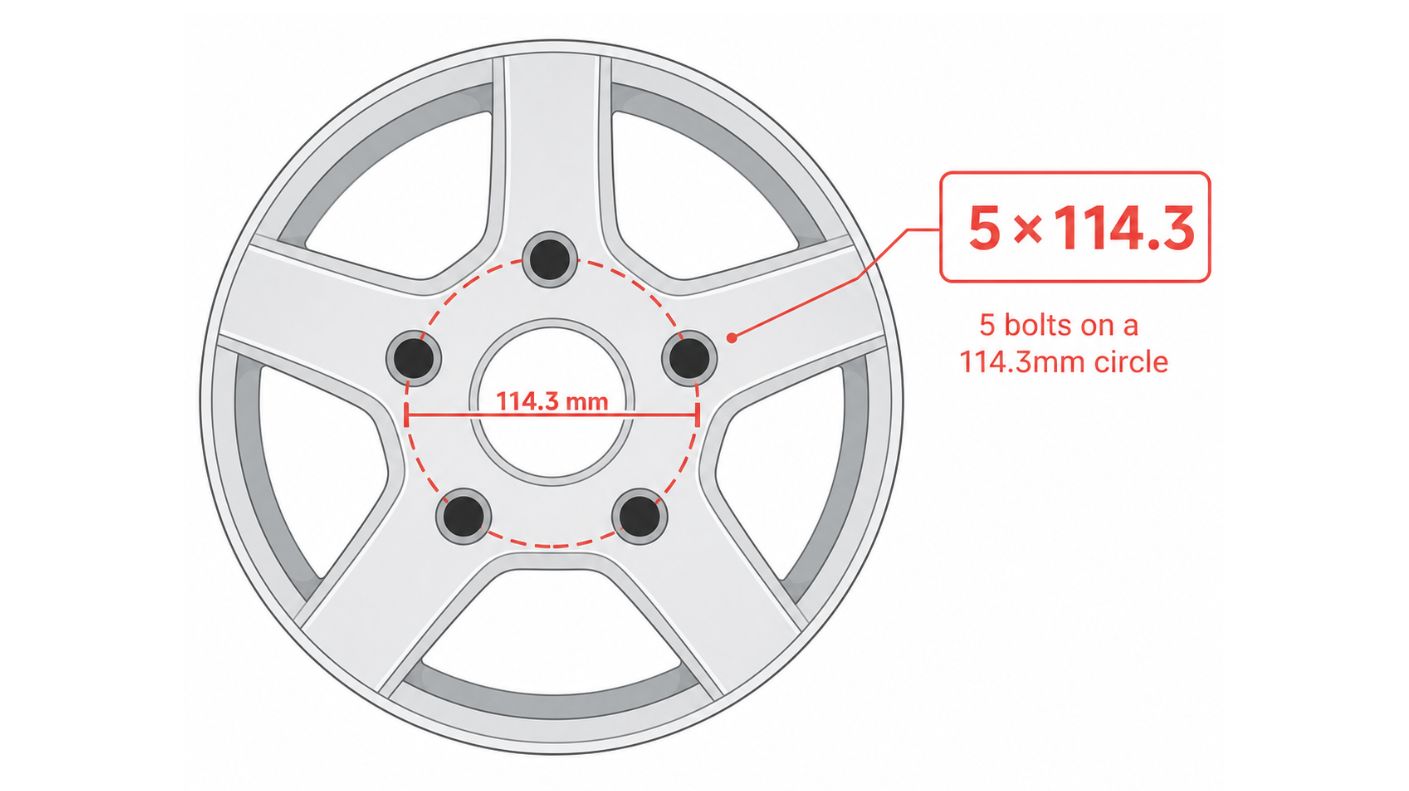
The bolt pattern, sometimes called PCD (pitch circle diameter), refers to two things: the number of bolt holes on the wheel and the diameter of the imaginary circle they form. It’s written as something like 5×114.3, which means five bolts on a 114.3mm circle.
Your new wheels need to match your vehicle’s bolt pattern exactly. A wheel with the wrong PCD won’t line up with your studs. Common bolt patterns on NZ roads include 5×114.3 (found on many Toyotas, Mazdas, Hyundais, and Nissans), 6×139.7 (utes and 4WDs like the Hilux and Ranger), and 5×100 (Subarus and some older Toyotas).
Offset (ET)
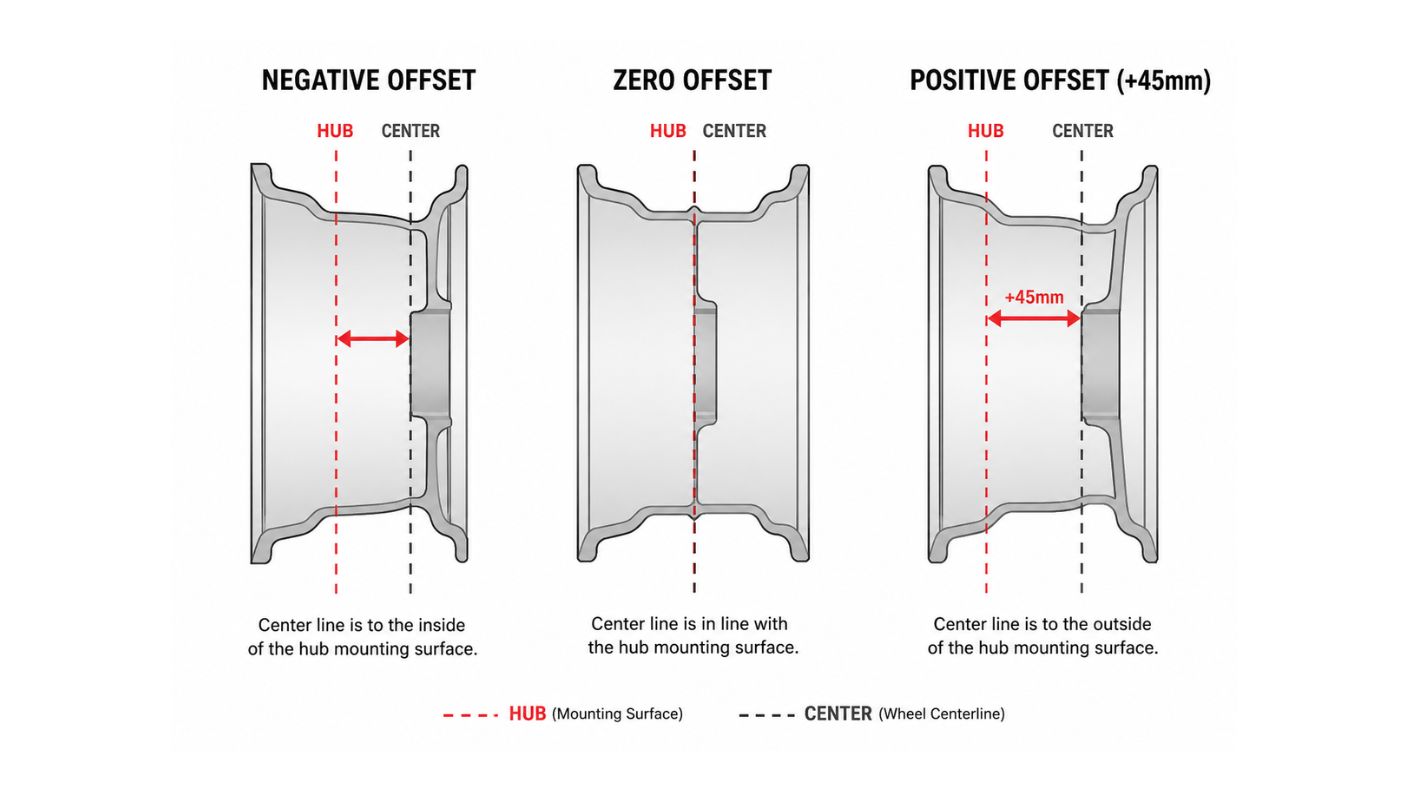
Offset (marked as ET on most wheels) is the distance in millimetres between the centre line of the wheel and the mounting face where it bolts to the hub. It determines how far in or out the wheel sits within the wheel arch.
A higher offset pushes the wheel further inward. A lower offset pushes it outward. If the offset is too far off from what your vehicle needs, the wheel can rub on the guard or on suspension parts, or the tyre tread might stick out past the body, which isn’t legal for road use in New Zealand.
Your vehicle’s factory offset is the safest starting point. As a rough guide, many owners find variations within 5 to 10mm manageable, but this is industry convention, not an official spec, so always check clearances before going further.
 Centre bore (CB)
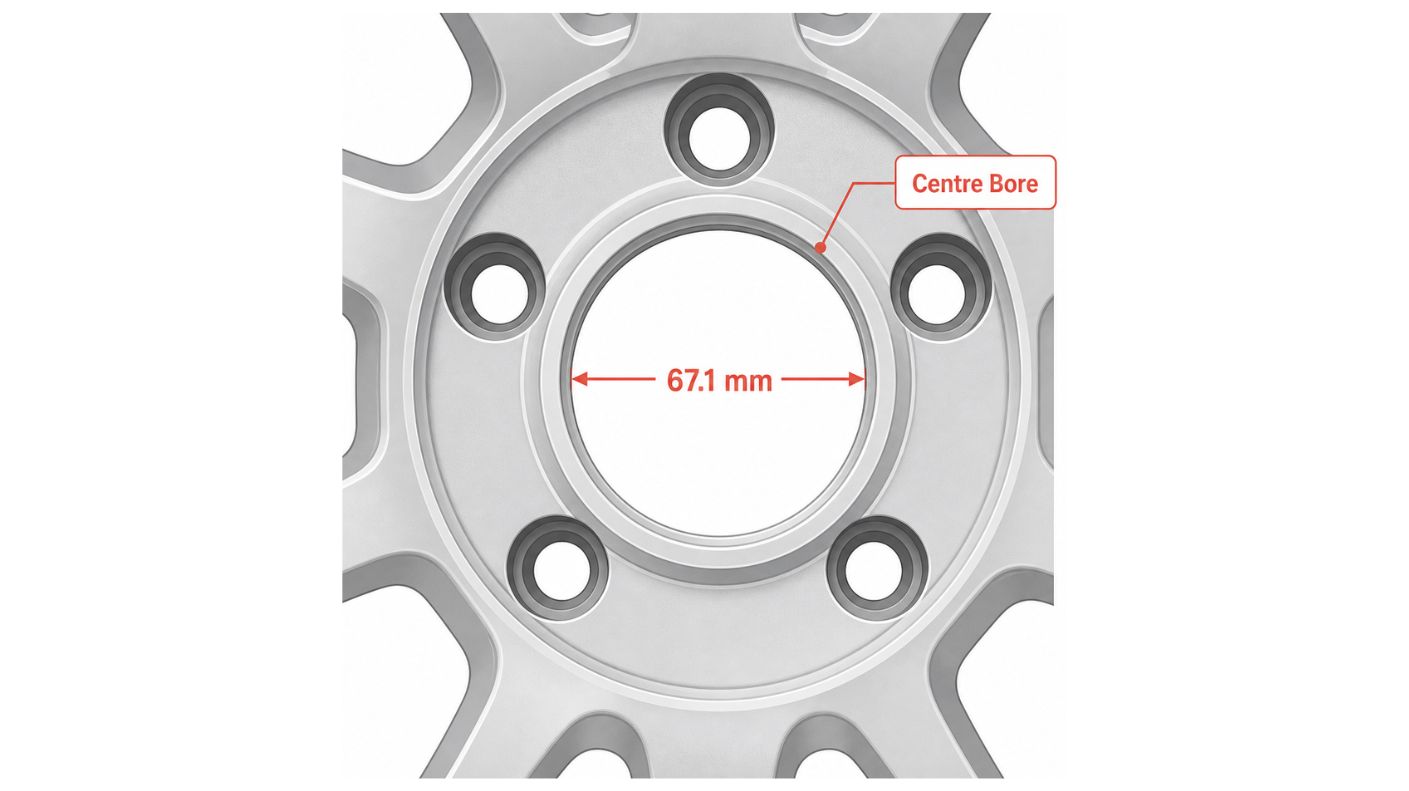
The centre bore is the hole in the middle of the wheel that fits over the hub on your car. If the centre bore matches your hub exactly, the wheel sits perfectly centred. This is called hub-centric fitment.
Most aftermarket alloy wheels have a larger centre bore so they can fit a wider range of vehicles. In that case, you’ll need spigot rings (small plastic or metal rings) to fill the gap and keep the wheel centred. Without them, you might notice vibration at higher speeds even if the wheel is balanced correctly.
Diameter and width
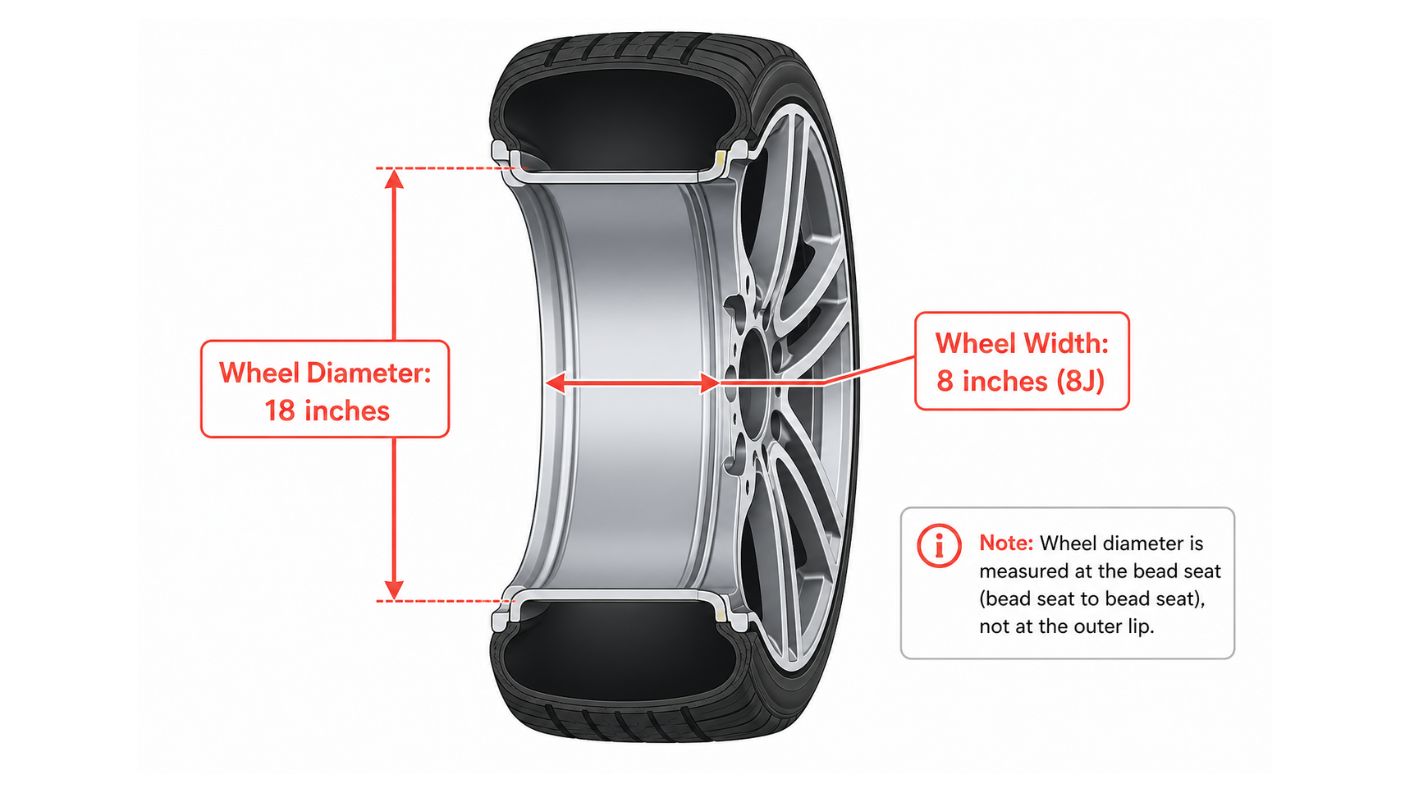
These are the measurements most people are already familiar with. Diameter is the size of the wheel in inches (e.g. 17″, 18″), and width is how wide the rim is. Both affect which tyres you can run. Going larger in diameter usually means a lower profile tyre to keep the overall rolling diameter similar to factory spec, which matters for your speedometer accuracy and odometer. Width also affects clearance. A wider wheel paired with a wider tyre might not fit without rubbing, particularly on vehicles with smaller wheel arches.
How to find your fitment specs
Most alloy wheels have their specs stamped on the inner rim, on the back of a spoke, or on the mounting pad. You’ll see something like 7.5Jx17 5×114.3 ET40 CB66.1. Here’s what that means:
- 7.5 is the width of the rim in inches
- 17 is the diameter in inches
- 5×114.3 is the bolt pattern (five bolts on a 114.3mm circle)
- ET40 is the offset (40mm from the wheel’s centre line to the mounting face)
- CB66.1 is the centre bore in millimetres
If the stamps are worn or missing, you can check your vehicle’s tyre placard on the driver’s door jamb for factory wheel size, or look in the specifications section of your owner’s manual. Your vehicle’s VIN (the 17-digit code on the lower dashboard or door jamb sticker) can also be run through a decoder to pull up factory wheel specs.
Choose the Right Alloy Wheels with Confidence
Alloy wheel fitment comes down to a handful of measurements. Once you know your bolt pattern, offset, centre bore, and size, you can shop with confidence knowing the wheels you choose will actually work on your vehicle. Take five minutes to check your specs before you buy, and you’ll save yourself the hassle of returns or costly mistakes.