Maintaining proper tyre pressure is key to keeping your vehicle safe, fuel-efficient, and performing at its best. While most drivers in New Zealand still use regular air to inflate their tyres, nitrogen in tyres has been growing in popularity. But is it really better? Let’s break it down in a simple, easy way to help you decide if nitrogen is right for you.
What Are the Advantages of Nitrogen in Tyres?
The main benefit of using nitrogen tyres is how well it maintains tyre pressure. Nitrogen molecules are larger than those in the regular air we breathe, meaning they leak out more slowly through the tyre rubber. This helps keep your tyres inflated at a more consistent pressure over time.
Other benefits of nitrogen filled tyres include:
- Improved fuel economy: Properly inflated tyres reduce rolling resistance, which means your vehicle uses less fuel. That’s a win for your wallet and the environment.
- Less pressure loss: Since nitrogen doesn’t escape as easily as compressed air, there’s less chance of sudden drops in tyre pressure.
- Better performance at high speeds: Especially useful for drivers regularly on the motorway or going on long road trips.
- Reduced tyre wear: Maintaining optimal tyre pressure helps extend the life of your tyres, saving you money in the long run.
In short, nitrogen tyre inflation helps keep your tyres inflated to the correct pressure for longer, which can improve fuel efficiency, tyre life, and overall safety.
What Are the Disadvantages of Nitrogen in Tyres?
While nitrogen in tyres offers advantages, it’s not essential for every driver. Here are a few things to consider:
- Availability: Not all service stations or tyre shops in New Zealand offer nitrogen inflation, so topping up may not always be convenient.
- Cost: Filling tyres with nitrogen costs more than regular air (which is often free), but many filling stations only charge a small fee for the nitrogen.
- Minimal difference for some drivers: If you regularly check your tyre pressure and drive under normal conditions, the benefits may be less noticeable.
So, while there are clear benefits, they depend on how you drive and how often you check your tyres. For many everyday drivers in New Zealand, air filled tyres still work just fine when regularly maintained.
Nitrogen vs Air in Tyres
Let’s look at a simple comparison:
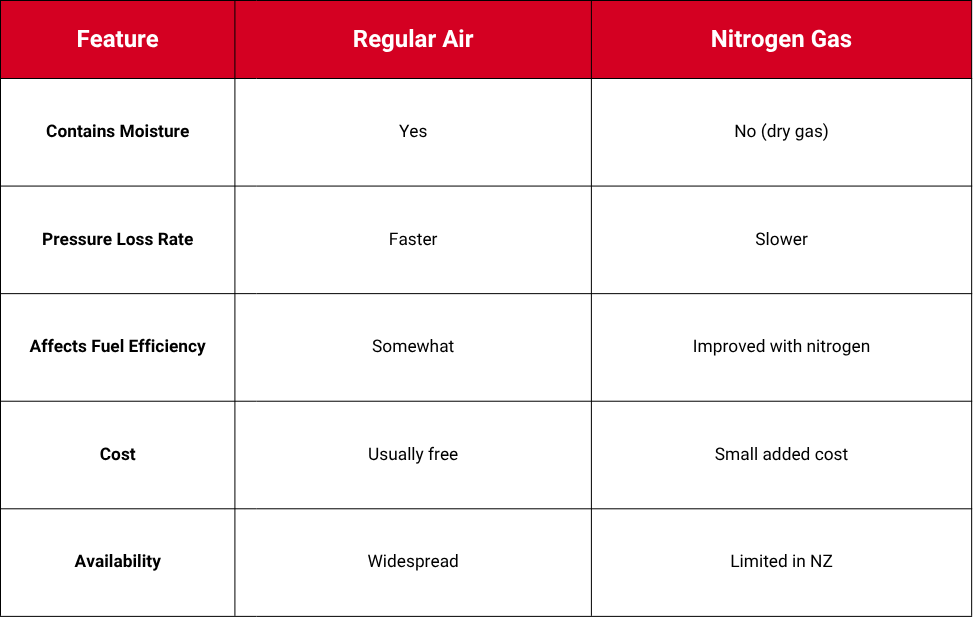
The main difference is how consistently nitrogen keeps tyres inflated. If you’re looking to reduce pressure loss over time and improve fuel efficiency, nitrogen can help.
How Long Does Nitrogen Last in Tyres?
Because nitrogen molecules are larger and leak more slowly, nitrogen in tyres tends to last longer than regular air. On average, it can take several months before a nitrogen filled tyre needs topping up. This is ideal for people who don’t check tyre pressure often or are heading out on long drives.
Still, it’s important to make a habit of checking your tyres regularly—regardless of what’s inside them.
Can I Mix Air and Nitrogen in My Tyres?
Yes, you can! If your tyres are filled with nitrogen but you need a top-up and only have access to compressed air, it’s totally fine to mix them. The tyre won’t be 100% nitrogen anymore, but it won’t harm your tyre or vehicle.
Just remember, mixing nitrogen with regular air means you’ll lose some of the benefits of pure nitrogen inflation. You can always go back to a filling station later and refill with pure nitrogen.
Is It Worth Having Nitrogen in Tyres?
For many drivers, nitrogen in tyres is a good idea—especially if you want consistent tyre pressure, improved fuel efficiency, and longer-lasting tyres without having to check your pressure all the time.
However, if you’re someone who keeps an eye on tyre pressure, does regular checks, and drives mostly in town, the difference may be minor. In that case, sticking with regular air is still a safe and cost-effective choice.
Where To From Here?
Using nitrogen in tyres isn’t a must-have—it’s entirely up to you and whether it feels like the right choice. That said, it can offer real advantages, especially if you spend a lot of time on the motorway, head out on road trips, or want to improve your fuel efficiency over time.
Whether you go with nitrogen or stick with regular air, the most important thing is maintaining proper tyre pressure. This keeps you safer on the road, improves fuel economy, and helps your tyres last longer. Always ensure your tyres are properly inflated to avoid damaging the tyre structure—and if you’re unsure, check your owner’s manual for the recommended pressure.
Keen to learn more? Check out our other helpful blogs on tyre safety, tread depth, and tips to get the most out of your tyres: