If you’ve ever sat behind the wheel wondering whether you’d prefer an automatic or manual car, you’re not alone. Whether you’re learning to drive, upgrading your vehicle, or planning your next road trip, understanding the difference between manual and automatic cars can help you make a smarter choice for your lifestyle.
What’s the Difference Between Automatic and Manual Cars?
The main difference comes down to how the gears shift.
- In a manual car, you’re in full control using a clutch pedal and gear stick to change gears manually as you drive.
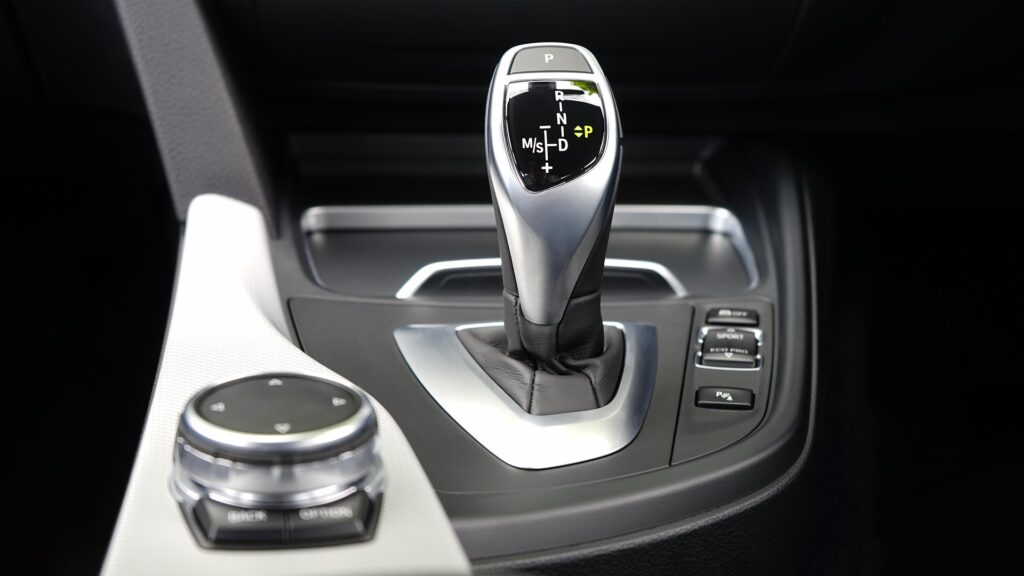
- In an automatic car, the automatic transmission does the work for you. It uses a torque converter and sensors to automatically shift gears depending on your speed and acceleration.
Manual vehicles are loved by those who enjoy more precise control and connection with the car, while automatic cars are popular for their ease of use, especially in heavy traffic or when driving up a steep hill.
Pros and Cons of Automatic vs Manual Cars
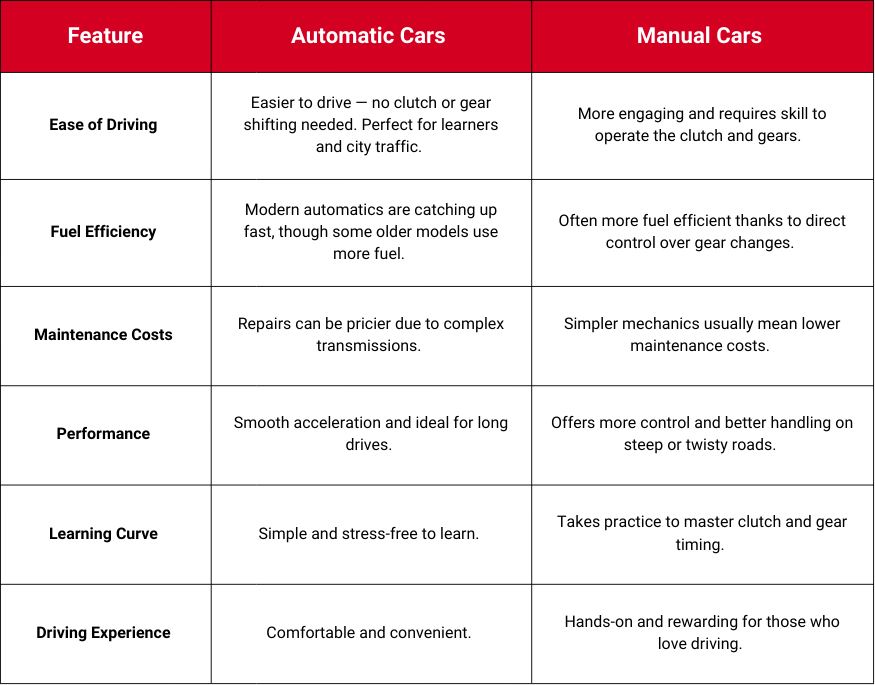
Who Should Drive a Manual Car?
Manual cars are great for people who enjoy full control and don’t mind being hands-on behind the wheel. You’ll learn how to balance the clutch pedal, shift gears smoothly, and understand how your car responds, it’s a more involved and satisfying experience.
They’re often chosen by:
- Drivers in rural or hilly areas, where manual control helps on tricky terrain.
- Motorsport fans who love precise gear control.
- Learner drivers who want to future-proof their skills.
Manual cars are often more fuel efficient and perform better on hill starts or steep drives. If you love driving and want to stay connected to your car, this might be the way to go.
FAQs About Automatic and Manual Cars
Are there cars that are both manual and automatic?
Yes, some vehicles feature a semi-automatic transmission or dual-clutch system, sometimes called tiptronic. These cars let you drive in automatic mode for convenience or manually shift gears without using a clutch pedal. They combine the best of both, the comfort of an automatic car and the control of a manual transmission. You’ll often find this setup in performance vehicles or modern SUVs.
Which is better, manual or automatic?
It depends on your needs and driving style. Automatic cars are easier to drive, especially in traffic, and are becoming more fuel efficient thanks to advanced automatic transmissions. On the other hand, manual vehicles give drivers more control, making them great for hilly or rural areas. If you love driving and want to feel connected to the car, manuals are hard to beat, but for comfort and convenience, automatics win.
Are New Zealand cars manual or automatic?
In New Zealand, most cars are now automatic, especially newer models and campervan rentals. However, plenty of manual cars and utes are still on the road, especially in smaller towns and on farms. As technology improves, automatic transmission vehicles are becoming more common across both the North and South Islands.
Can you drive a manual car with an automatic licence in NZ?
No, if your licence is restricted to automatic cars, you can’t legally drive a manual vehicle. To do so, you’ll need to sit a practical test in a manual car. It’s a good idea to learn manual driving early if you plan to travel overseas or want the flexibility to drive any type of car.
Is an automatic car better for long drives?
Yes, automatic cars are usually better for long drives. They remove the need for constant gear changes and clutch use, making your journey smoother and less tiring. With modern automatic transmissions, the car automatically adjusts gears for the best fuel efficiency, which is great for cross-country road trips around NZ.
Are manual cars more reliable than automatics?
Both can be reliable when well maintained. Manual cars have simpler mechanics, so they’re cheaper and easier to repair if something goes wrong. However, modern automatic transmissions are designed to last longer and need less driver skill to operate smoothly, a bonus for those who want an easy drive without worrying about the clutch pedal or gear shifts.
Do automatic cars use more fuel?
Not anymore. Older automatic vehicles did use slightly more fuel, but today’s fuel-efficient automatic transmissions can be just as good, sometimes even better than manuals. Systems like CVT (continuously variable transmission) and dual-clutch automatics are designed to maximise economy and smooth out gear changes.
Are manual cars faster than automatic cars?
Once upon a time, yes, but technology has changed that. Modern automatic cars with dual-clutch systems shift gears faster than any human can. In everyday driving, though, the difference is tiny. What matters more is your driving preference: manual cars give that sporty, connected feel, while automatics deliver effortless, consistent performance.
The Final Gear
So, which will it be, automatic or manual?
If you want an easy, stress-free drive that’s smooth on the open road, go for an automatic car. But if you’re after more control, enjoy learning new skills, and don’t mind using the clutch pedal, a manual car might be your match.
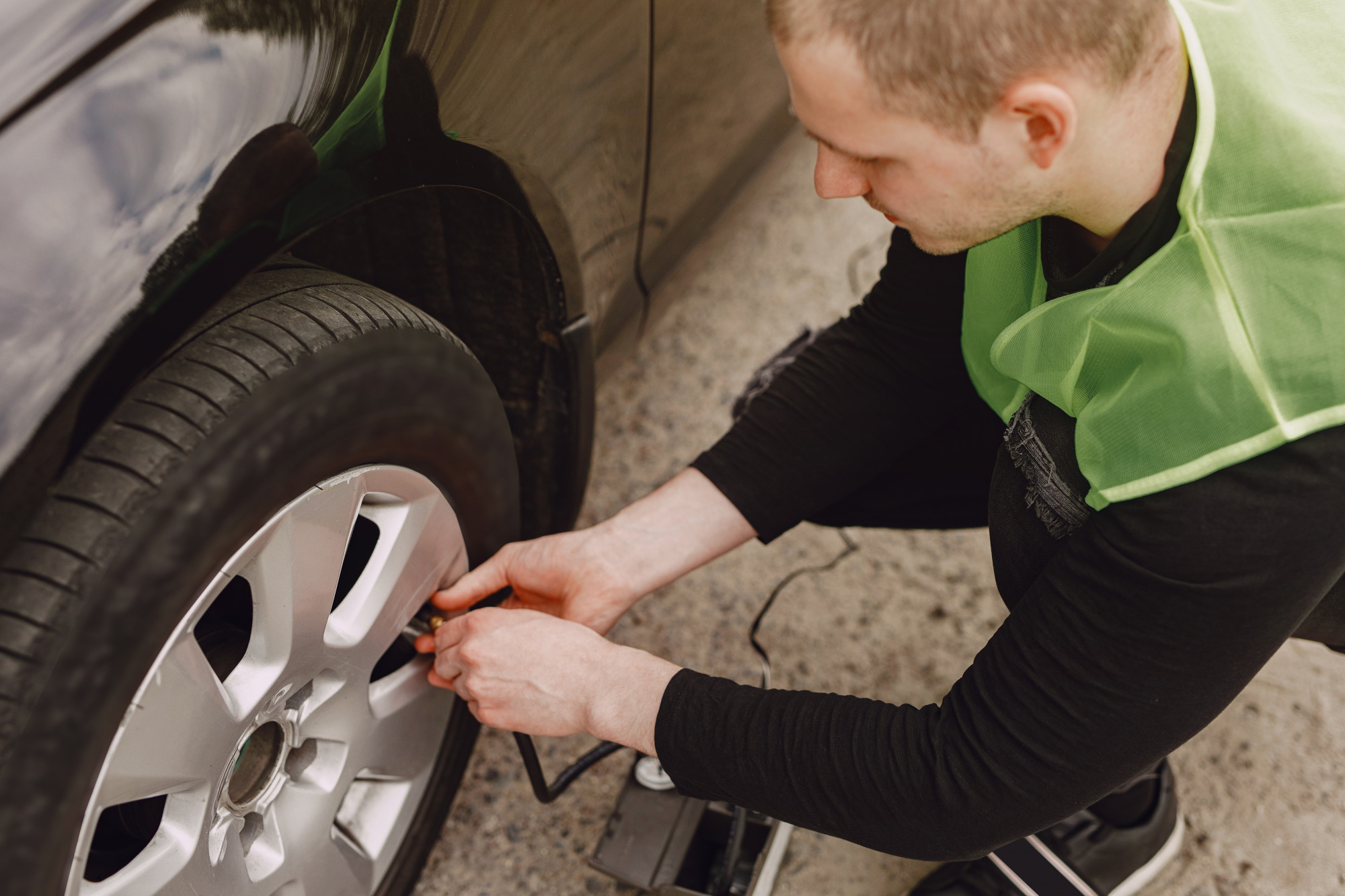
Either way, keeping your car maintained from tyres to transmission, will make your drive safer, smoother, and a whole lot more fun.